
Bring Zen into Your Space
Bring Zen into Your Space

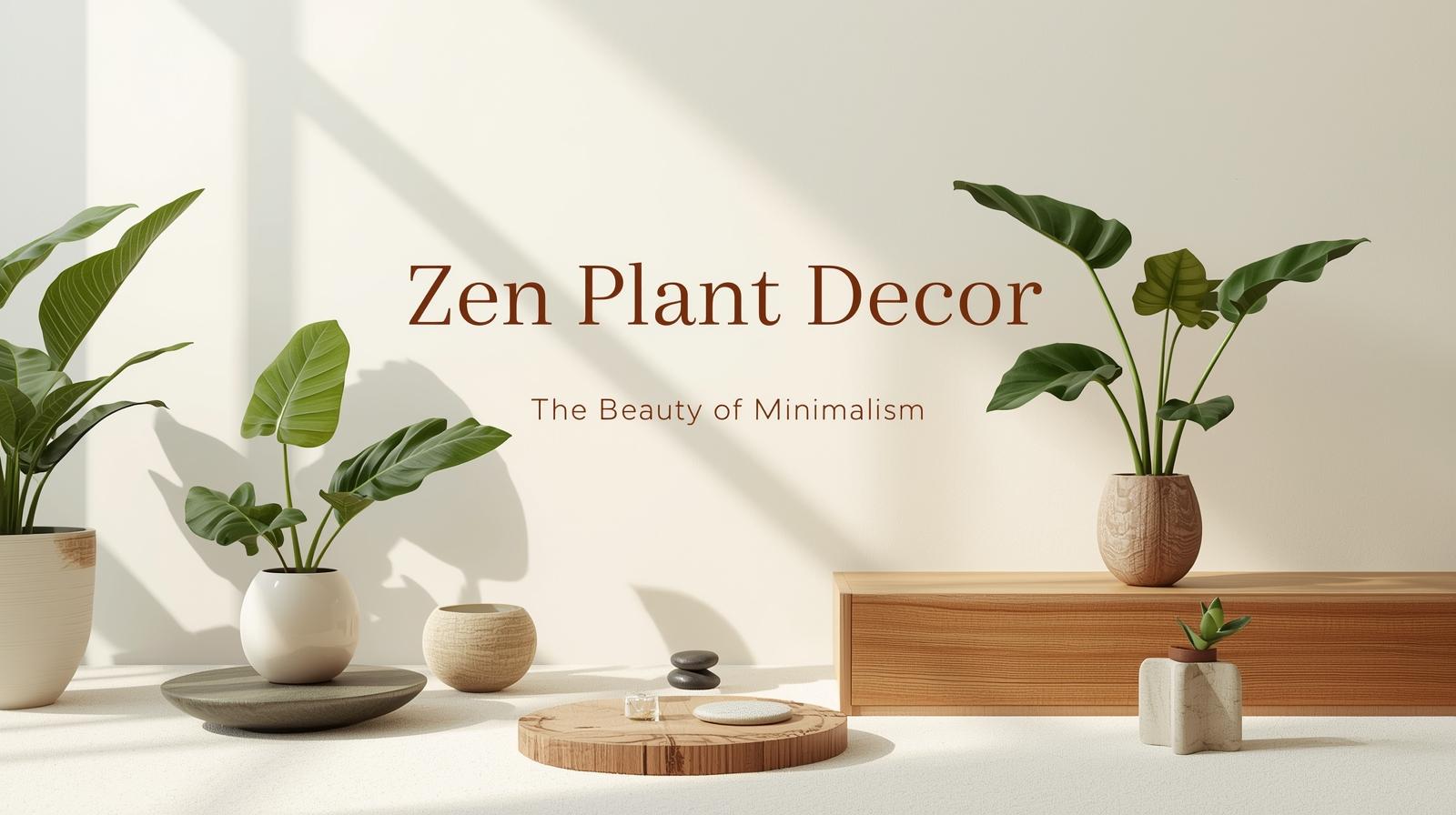
In a world filled with noise and clutter, the quiet presence of a single plant can anchor us in stillness. This article explores how minimal design, guided by Zen philosophy, invites harmony into our homes through thoughtful plant decor—where less truly becomes more.
Zen aesthetics are rooted in simplicity, asymmetry, naturalness, and tranquility. These principles echo the heart of minimal design, which strips away distraction to reveal what truly matters.
In plant styling, this means honoring the quiet beauty of greenery without embellishment or excess. Each leaf, stem, and shadow becomes part of a silent composition.
Zen plant decor isn’t about filling every corner with foliage. It’s about choosing with care, placing with purpose, and allowing space for presence to bloom.
Minimal design creates room for the mind to rest. When applied to plant styling, it transforms a room into a living meditation—a space where stillness and growth coexist.
Not all plants suit the Zen ethos. Look for varieties that embody calm through their form, pace, and resilience—plants that thrive quietly, without demanding constant attention.
The snake plant, with its upright, sword-like leaves, offers structure and serenity. It purifies the air and survives in low light, making it a perfect companion for mindful spaces.
The ZZ plant shares similar qualities: glossy foliage, slow growth, and a tolerance for neglect. Its understated elegance mirrors the Zen ideal of effortless being.
For those drawn to living art, the Japanese maple bonsai captures centuries of tradition in a single, miniature tree. Its deliberate shaping reflects patience and balance—core tenets of bonsai as a meditative practice.
The peace lily, with its graceful white spathe and deep green leaves, brings softness and purity. Meanwhile, the bamboo palm adds gentle verticality without overwhelming a space.
Care for these plants should feel like a ritual, not a chore. Water only when needed. Wipe leaves with a damp cloth. Observe. Listen. Let their rhythms guide yours.
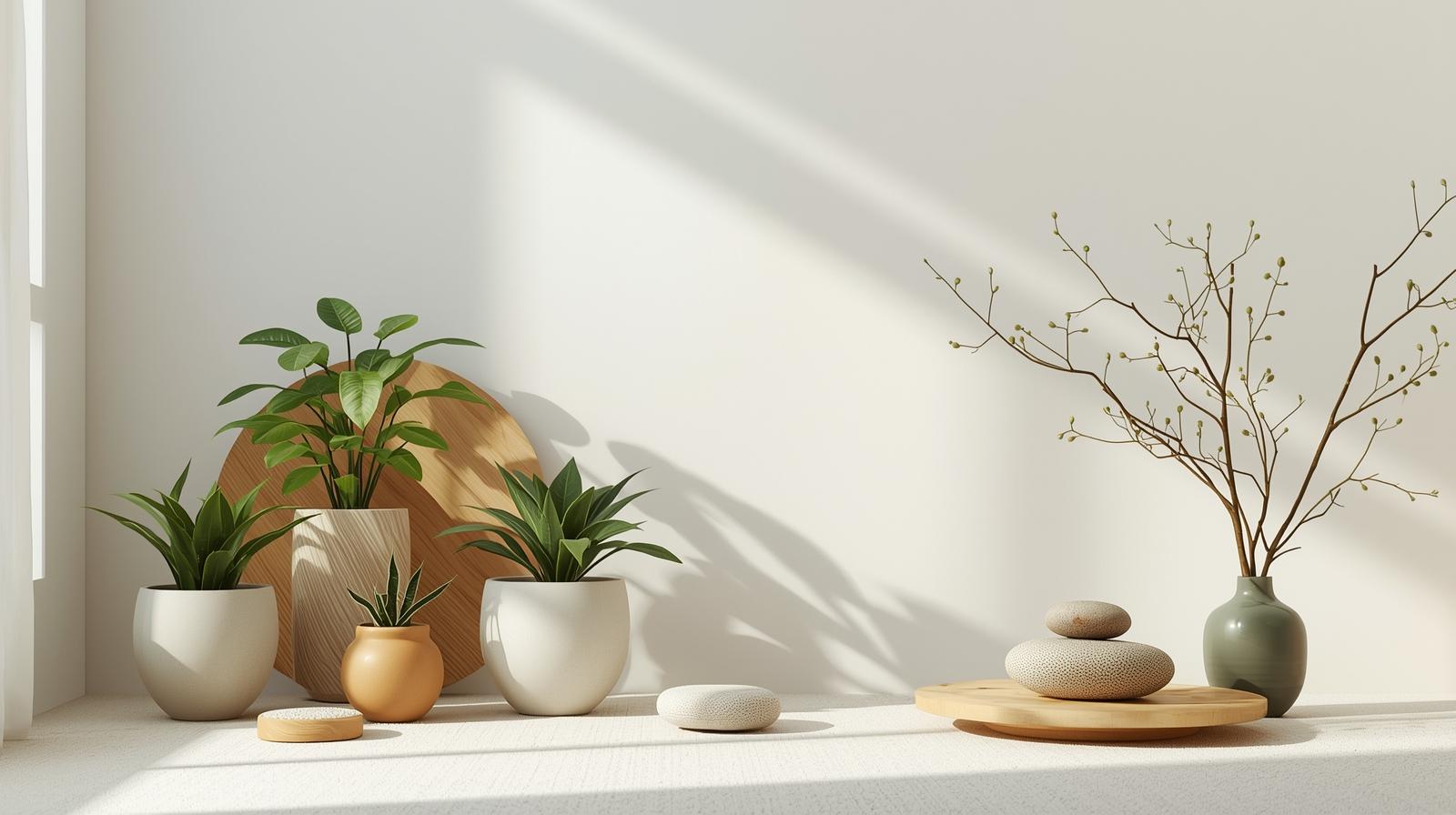
One of the most common mistakes is overcrowding. A shelf lined with ten small pots creates visual noise, not calm.
Instead, give each plant room to exist fully—physically and visually. Let negative space frame the greenery, just as silence frames a single note in a Zen chant.
Avoid ornate or brightly colored containers that draw attention away from the plant itself. A gilded pot may dazzle, but it distracts from the quiet truth of the leaf.
Remember: in Zen design, emptiness is not absence. It is an invitation—to breathe, to reflect, to notice what is already there.
The vessel matters as much as the plant it holds. In Zen plant decor, containers should feel grounded, honest, and unpretentious.
Choose materials that speak of the earth: unglazed terracotta, rough-hewn wood, smooth river stone, or matte ceramic. These textures carry the quiet imperfection known as wabi-sabi—beauty in transience and flaw.
Neutral tones—soft grays, warm beiges, muted greens—allow the plant to shine. A simple cylindrical pot or a shallow dish lets form follow function without fuss.
Consider repurposing found objects as planters. An old stone basin, a weathered wooden tray, or a chipped bowl can become a home for a small fern or moss arrangement.
Such choices deepen your connection to nature, reminding you that beauty often lies in reuse, not replacement.
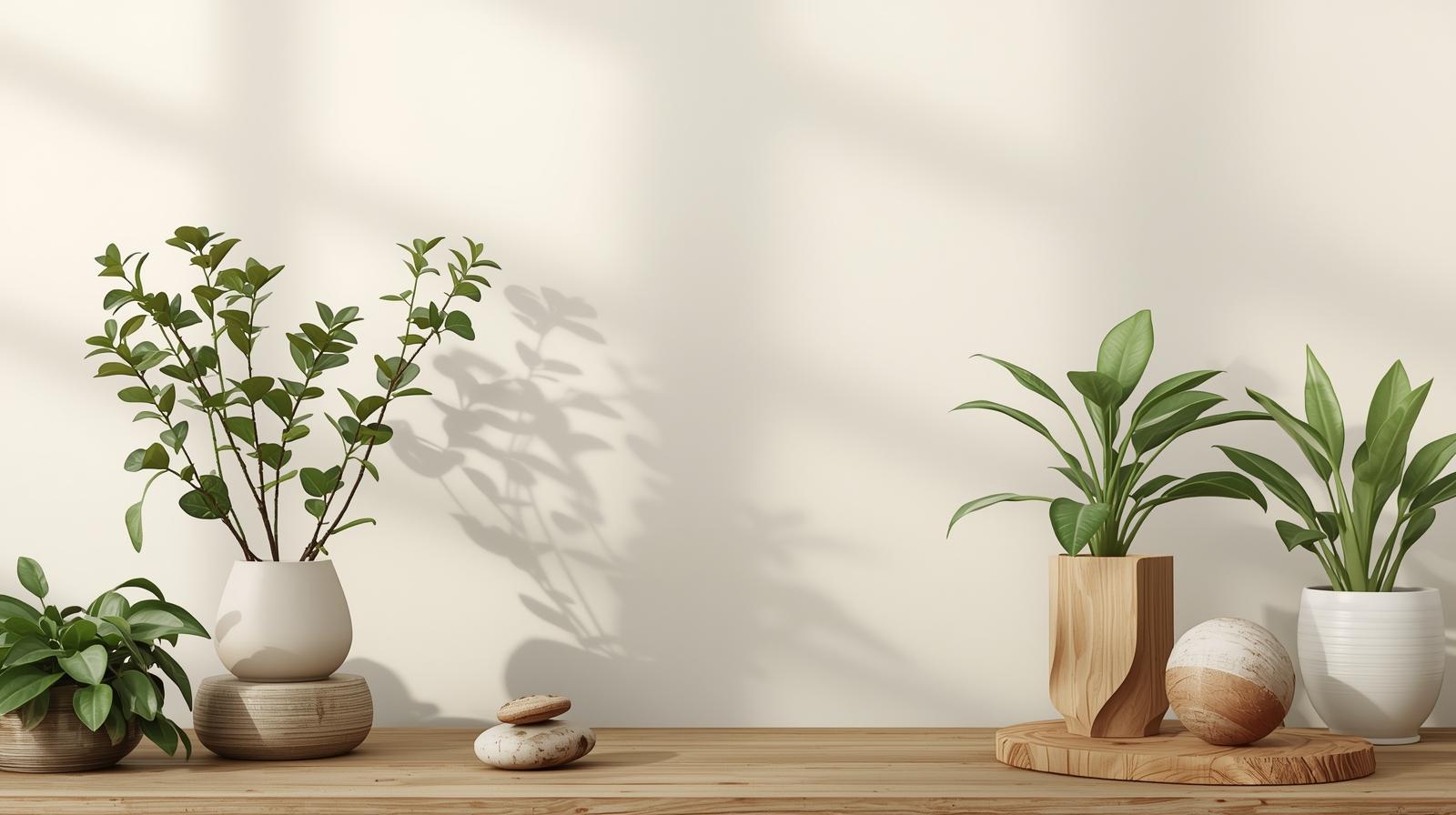
Placement is a silent language. In Zen plant decor, every position carries meaning—balance without symmetry, focus without force.
Instead of clustering plants on a windowsill, try placing one sculptural specimen—like a tall snake plant or a cascading pothos—in an empty corner. Let it draw the eye gently, like a single brushstroke on rice paper.
Position plants where natural light filters through. Morning sun on a peace lily’s leaves can turn an ordinary wall into a canvas of shifting light and shadow.
Think of your room as a living scroll. Each plant is a character in a quiet story. Too many characters confuse the plot; too few leave it hollow.
Indoor arrangements can echo the contemplative layout of traditional Japanese gardens—where every rock, path, and tree is placed to guide the mind inward. Learn more about this timeless art in our guide to the zen garden.
Zen teaches that deep awareness begins with focus on a single object. In plant decor, this means choosing one meaningful plant as your daily anchor.
Imagine a single peace lily on a wooden stool by a north-facing window. Its white bloom appears slowly, humbly, like a thought rising in meditation.
Over time, you notice how its leaves tilt toward the light, how droplets cling to its surface after watering, how it seems to exhale calm into the room.
That one plant becomes more than decor. It becomes a companion in stillness—a reminder that presence grows in simplicity.
Caring for plants need not be a task. It can be a ritual woven into the fabric of your day.
As you sip your morning tea, run a finger along a ZZ plant’s leaf. In the evening, as you dim the lights, mist a fern with water and watch the droplets catch the last glow.
These small acts become moving meditations. Pruning a yellow leaf isn’t failure—it’s tending. Dusting a surface isn’t cleaning—it’s honoring.
Minimal design isn’t about perfection. A slightly lopsided stem or a drooping frond doesn’t break the aesthetic; it deepens it.
Imperfection reminds us that life is fluid. Zen plant decor embraces the full cycle—growth, rest, decay, renewal—as part of its quiet poetry.
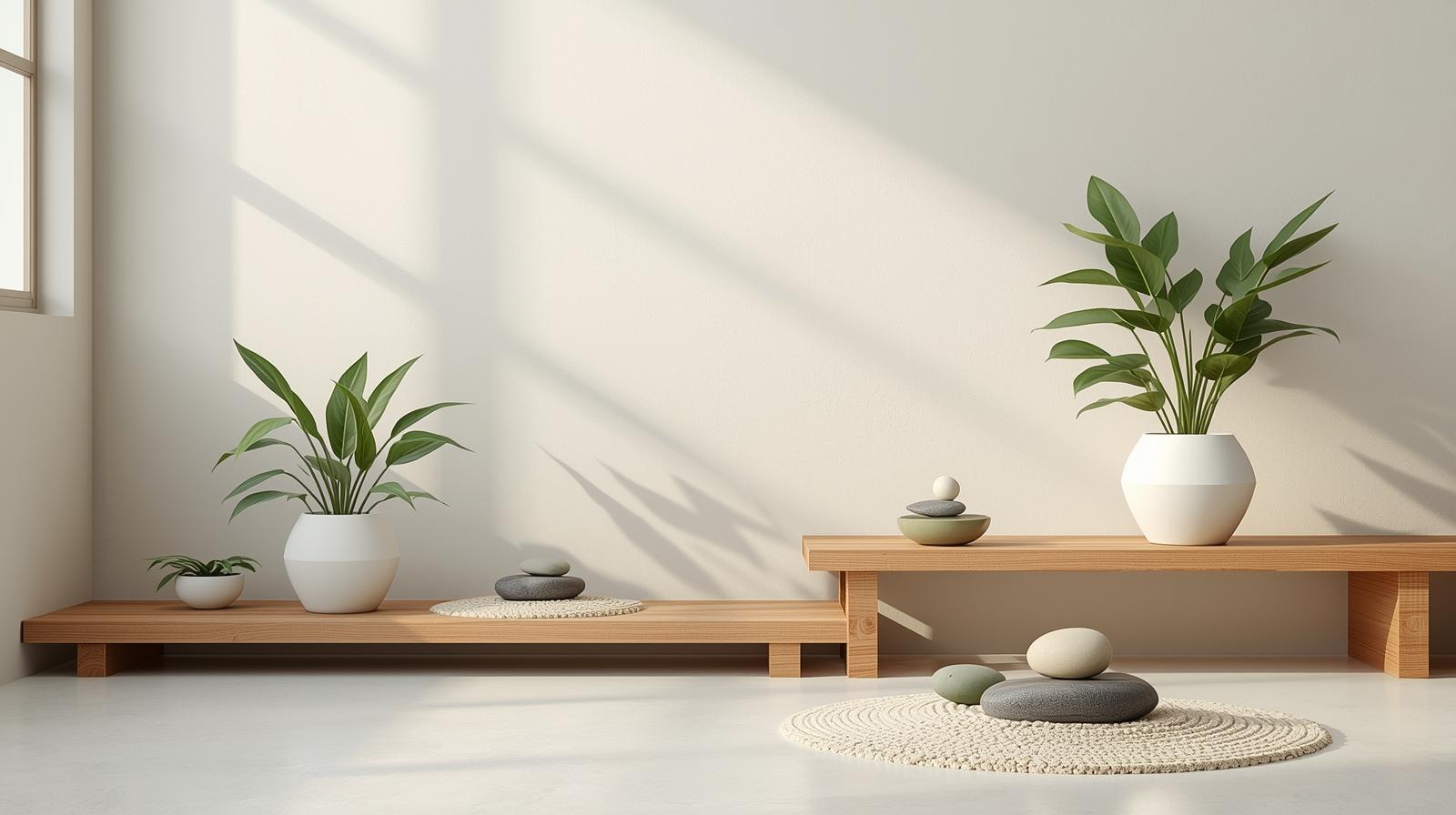
Plant decor, when rooted in Zen, is never just about looks. It’s a gateway to a slower, more intentional way of living.
A home filled with thoughtful greenery invites you to pause before reacting, to breathe before speaking, to choose fewer things but care for them deeply.
This approach extends beyond pots and leaves. It influences how you shop, how you arrange furniture, how you spend your time.
Instead of chasing trends, you shape a sanctuary that reflects your values—clarity, calm, connection. Your space becomes a mirror of your inner world.
Plant-filled minimalism supports a holistic path toward peace. To explore how this extends into daily habits, consider our reflections on zen living, where simplicity meets soulful presence.
Zen plant decor has no rigid rules. It asks only that you listen—to the light in your room, to the needs of your plants, to the quiet rhythm of your own breath.
Start small. One plant. One quiet corner. One moment of noticing.
Let that be enough. In the space between leaves and silence, you may find exactly what you’ve been seeking.
In caring for plants, we care for ourselves — quietly, patiently, and with love.