
Bring Zen into Your Space
Bring Zen into Your Space

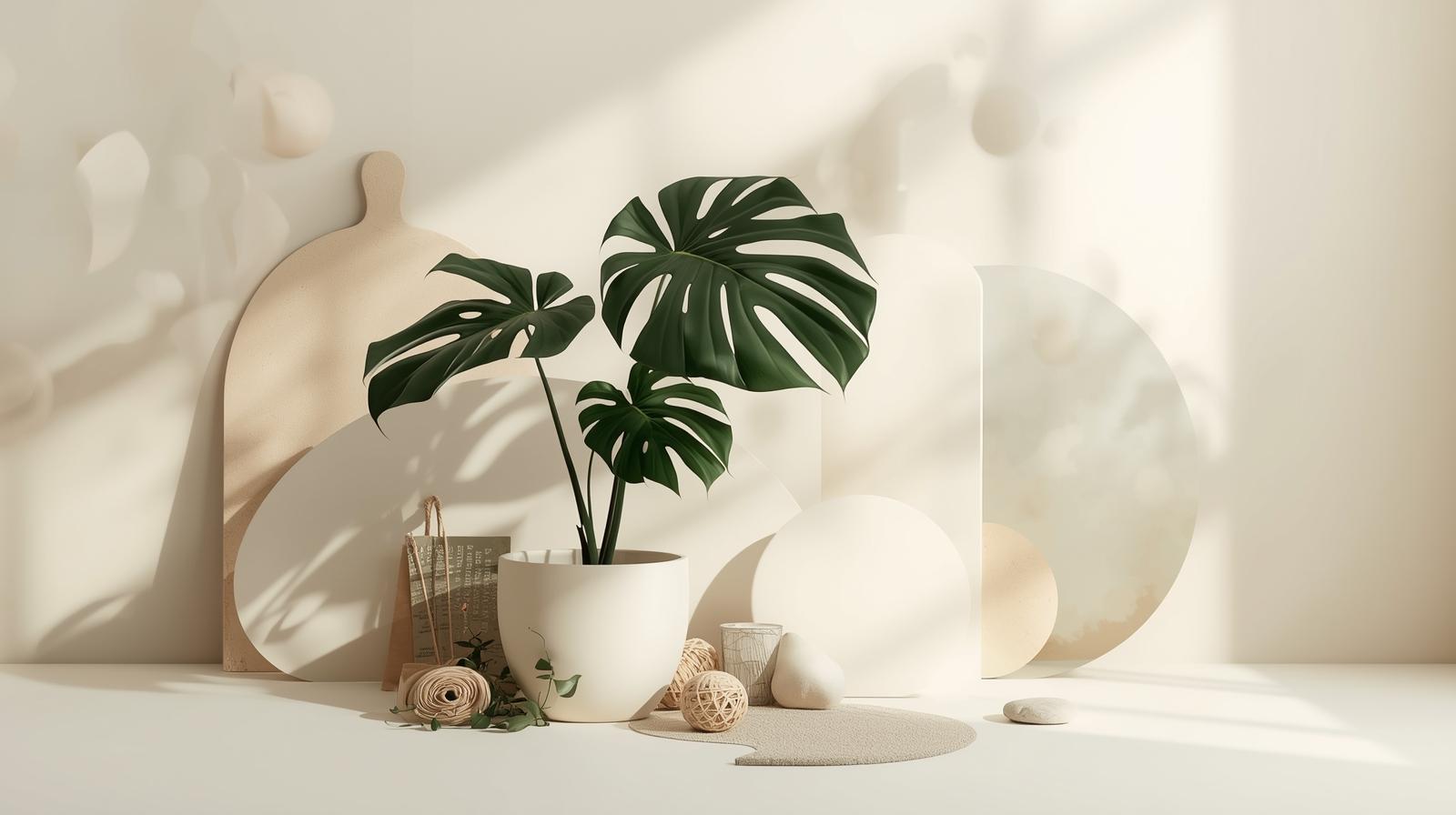
Sunlight slips through the broad, waxy leaves of my Monstera, casting lace-like shadows on the wooden floor. There’s a stillness here—not empty, but full: full of breath, of slow time, of green resilience unfolding in silence. To step into this room is to enter a shared rhythm, one that has grown quietly over years, leaf by leaf, heartbeat by heartbeat.
It arrived on a Tuesday in late March, wrapped in crinkled brown paper and tied with twine. I’d just moved into a studio apartment after a breakup that left my routines in shreds and my walls bare. The gift wasn’t grand—just a single Monstera deliciosa in a thrifted ceramic pot, its one leaf slightly curled at the edges, like a question mark.
I remember the weight of it in my hands: heavier than I expected, solid and grounding. The soil smelled faintly of damp earth and something sweetly fungal—the scent of life waiting. That first leaf, already hinting at a future fenestration, felt both fragile and determined.
Sometimes, the most transformative relationships begin not with words, but with quiet presence. This plant didn’t ask for anything except a window and a chance. And in return, it offered me something I didn’t know I needed: a companion in stillness.
I hadn’t asked for a plant. In truth, I wasn’t sure I could keep anything alive. My kitchen counter held only a single mug and a wilting basil sprig from the grocery store. But my friend Maya showed up unannounced, holding this green stranger like an offering.
“You need something that grows slowly but surely,” she said, placing it gently on my windowsill. Her words hung in the air like incense smoke—simple, but carrying weight.
That single leaf reminded me of a child’s drawing: imperfect, hopeful, full of potential. It didn’t demand admiration; it simply existed. And in that moment, existence felt like enough.
This quiet arrival echoed what I’d later explore in our plant philosophy series: that plants often mirror our inner landscapes, reflecting back our readiness for care, for change, for quiet faith.
The pot was chipped on one side, the glaze worn thin near the rim—a sign it had lived before me. The soil was compacted, slightly dry, as if the plant had been waiting in a dim corner for someone to notice it. I ran my fingers along the stem, feeling for firmness, for life.
I placed it by the east-facing window, where morning light pooled like liquid honey on the floorboards. For the first week, I checked it obsessively—not out of love, but out of anxiety. Would it survive me? Was I capable of this small act of stewardship?
Slowly, watering became less of a task and more of a ritual. I’d pour water in a slow circle, watching it soak in, listening to the soft sigh of thirsty roots. It felt like a conversation, even if only one of us was speaking.
Those early days taught me that care begins not with expertise, but with attention. And attention, offered consistently, is its own kind of love.
For nearly six months, nothing changed. No new leaves unfurled. No splits appeared. The Monstera sat in its pot like a green statue, unmoved by the seasons turning outside or the emotional weather inside me.
I’d run my fingers along its thick stem, searching for nodes, for the faintest bump of a future leaf. But there was only smooth, stubborn silence. I began to wonder if I’d done something wrong—if my uncertainty had seeped into the soil and stunted its will to grow.
Yet looking back, I see now that growth isn’t always visible. Sometimes, the most important work happens beneath the surface—in the dark, quiet places where roots gather strength and trust the timing of light.
Patience isn’t passive waiting; it’s active trust in unseen processes. It’s showing up, day after day, even when the evidence of progress is absent.
I began to doubt everything. Was the light too weak? Was I overwatering? Underwatering? I scoured forums, watched YouTube tutorials, compared my plant to Instagram-perfect Monsteras with split leaves the size of dinner plates.
But my Monstera wasn’t performing for me. It wasn’t trying to earn my approval or fit into a curated aesthetic. It was simply being—rooted, present, unbothered by my expectations.
That stillness forced me to confront my own need for visible results, a habit deeply rooted in productivity culture. I’d been treating the plant like a project to complete, not a life to accompany.
In its quiet refusal to hurry, it taught me to release the illusion that growth must be fast, loud, or photogenic to be real.
Eventually, I stopped checking for new growth every morning. Instead, I’d sit near it with my tea, watching dust motes dance in the slanted light. The plant became a silent teacher in the art of non-attachment to outcomes.
I began journaling beside it, using its presence as an anchor for morning mindfulness. On hard days, I’d rest my hand on its pot and breathe, as if drawing calm from its steady green pulse.
The faint creak of the floorboard beneath my chair, the rustle of its leaf when the window opened—these small sounds became part of my daily meditation.
This practice aligns deeply with the principles in our slow-living guides: presence over performance, being over doing, and the quiet joy of shared stillness.
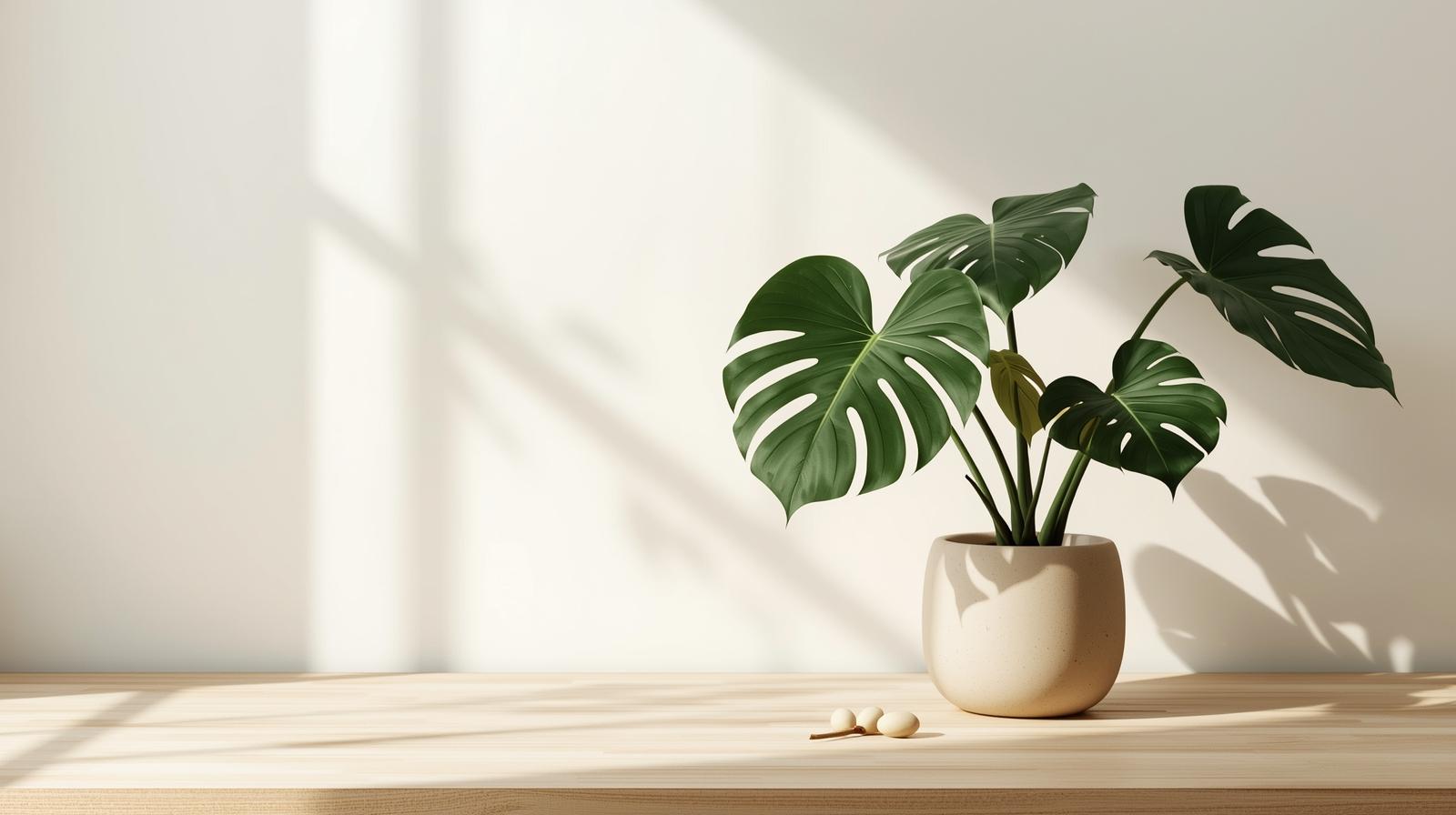
It happened in early autumn. A new leaf began to unfurl—not dramatically, but with quiet determination. Over three days, it opened like a slow-motion bloom: emerald, waxy, trembling slightly in the breeze from the ceiling fan.
And then I saw it: a tiny perforation near the edge. Not a tear, but a deliberate split—a fenestration. Like a shy smile after months of silence, it felt like a whispered “yes.”
I stood there, barefoot on the cool floor, holding my breath. There was no fanfare, no applause—just this small, sacred evidence that time, care, and trust had been honored.
True growth announces itself not with fanfare, but with subtle proof that patience has been met with grace.
Fenestrations aren’t flaws. In the wild, they allow Monstera leaves to capture dappled light in dense rainforests while letting wind pass through, reducing damage. They’re evolutionary wisdom written in leaf form.
My own “splits”—the vulnerabilities, the changes, the emotional scars—began to look different too. They weren’t weaknesses, but adaptations. Ways I’d learned to let light in while staying rooted through storms.
I photographed the leaf daily, not to track progress, but to honor its unfolding. Each image was a love letter to slowness, to the beauty of incremental becoming.
The joy wasn’t in the result, but in witnessing the process. In being present for the quiet miracle of a leaf learning to breathe through holes.
I texted Maya: “It split.” Her reply came instantly: “Of course it did. You both needed time.”
I didn’t post it online. This felt too intimate for performance, too tender for the curated highlight reel of social media. Instead, I sat beside the plant that evening and thanked it aloud—a moment that felt both silly and sacred.
The sound of my own voice in the quiet room, the almost imperceptible sway of the leaf in response—it was enough. No audience required.
This quiet celebration embodies the spirit of an authentic plant story: not staged, not optimized, but lived in real time, with all its messiness and grace.
Over time, tending the Monstera became less about technique and more about relationship. Watering evolved from a checklist item to a conversation—checking soil moisture like taking its pulse, listening with my fingers instead of my eyes.
I learned to water deeply but infrequently, letting the top two inches of soil dry out between sessions. This rhythm mirrored my own need for space and nourishment: sometimes I needed to be filled, sometimes I needed to rest in dryness.
Care, when offered without expectation, becomes a form of love. Not because the plant “deserves” it, but because the act itself softens the heart of the giver.
Morning: misting the leaves while opening the blinds, watching droplets catch the light like tiny prisms.
Monthly: wiping each leaf with a damp cloth, feeling their texture like reading braille—smooth on top, slightly ridged underneath, alive with quiet stories.
Seasonally: repotting together—a shared moment of expansion and trust, where I’d gently loosen its roots and whisper encouragement as it settled into fresh soil.
These rituals anchored my days, especially during long stretches of remote work and isolation. They gave structure to my solitude, turning routine into reverence.
This approach aligns with our detailed Monstera care guide, but here it’s framed not just through technique, but through emotional rhythm—the quiet pulse of mutual care.
One winter, I overwatered it. The soil stayed soggy for too long, and the roots began to soften. Panic set in—I’d failed it, just as I feared I might.
But instead of discarding it, I trimmed the rot, repotted it in fresh, well-draining mix, and whispered apologies into its leaves. I placed it in brighter light and waited, holding space for recovery.
It survived—not because I was perfect, but because I was willing to learn, to try again, to forgive myself.
Plants teach us that recovery is possible, even after missteps. That resilience isn’t about never falling, but about how gently we help each other rise.
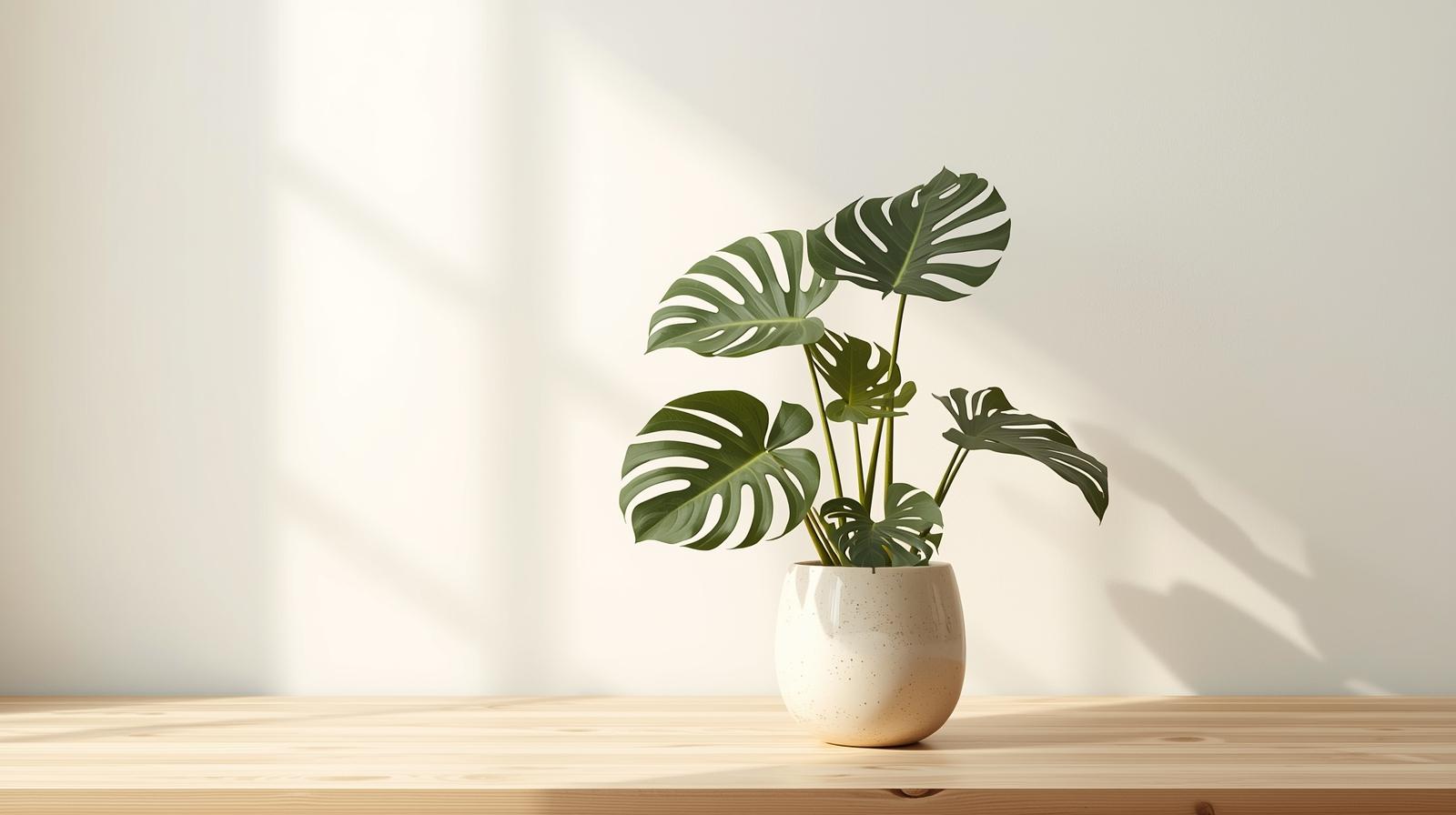
Now, three years later, my Monstera grazes the ceiling. Its aerial roots cling to a moss pole like fingers reaching for the sky. I’ve had to move my reading chair, shift the bookshelf, make space for its joyful sprawl—a beautiful inconvenience.
As it climbed, I did too. I began reaching toward new friendships, creative projects, even a larger apartment with better light. Its growth mirrored my own—not in speed, but in direction: upward, outward, with increasing confidence.
To share space with a living thing is to surrender control and embrace co-evolution. You don’t command a plant to grow; you create conditions where it can choose to, and you adjust your life accordingly.
This plant—once a single leaf in a chipped pot—has become a living testament to the quiet power of patience, presence, and mutual care. It hasn’t just grown in my home; it has grown *with* me, teaching me that the most profound transformations happen not in bursts, but in breaths. And in that shared rhythm, I’ve found a deeper kind of belonging—one leaf, one moment, at a time.