
Bring Zen into Your Space
Bring Zen into Your Space

Imagine standing barefoot on damp soil at dawn, the air cool and fragrant with petrichor, as a single dewdrop trembles on the edge of a fern frond. In that quiet stillness, the world slows—no urgency, no noise—only the gentle unfurling of leaves reaching toward light. This moment, simple yet profound, invites you into a space of calm awareness, where plants become silent teachers of life’s deepest rhythms.
Plants grow without fanfare. They do not announce their progress with sirens or social posts. Instead, they stretch, split, and spiral in near silence—guided not by external validation but by an inner compass tuned to light, moisture, and time. In a world obsessed with speed and visible results, their steady, unassuming expansion offers a quiet rebellion.
Consider the monstera: its iconic split leaves don’t burst forth overnight. They emerge slowly, shaped by weeks of subtle shifts in light and humidity, rooted in a network of energy we never see. Run your fingers along the textured veins of a philodendron leaf—it’s a map of patience written in green, each ridge a testament to quiet persistence.
True growth often happens beneath the surface, like roots threading through dark earth while the world watches only the bloom. This hidden labor is not wasted; it is essential. It reminds us that becoming is rarely a spectacle—it is a slow, daily commitment to showing up for yourself, even when no one is watching.
And just as plants honor their own timelines, so too can we release the pressure to “arrive” on someone else’s schedule.
A spider plant sends out runners only when it feels secure—not because it’s “supposed to,” but because its internal conditions align with its external environment. There’s no anxiety in its extension, only readiness. This mirrors a truth we often forget: growth cannot be forced. It must be invited.
Unlike human productivity metrics—measured in outputs, likes, and deadlines—plant growth honors natural cycles. Dormancy in winter isn’t failure; it’s conservation. Spring’s burst isn’t ambition; it’s response. There’s no guilt in resting, no shame in pausing. The rhythm is built into the biology.
When we repot a root-bound peace lily, we’re not “fixing” it. We’re acknowledging its quiet signal: “I am ready to expand.” This is not intervention but collaboration—a mutual trust between caretaker and plant. In that act, we practice humility: listening instead of commanding.
Slow growth is not stagnation. It is depth in disguise.
Not every stem needs a flower. Some plants, like the calathea or the prayer plant, offer beauty through leaf pattern, movement, and color alone. Their elegance lies in subtlety—the way their leaves fold at dusk like hands in prayer, or shimmer with iridescent veins under morning light.
Yet we often equate worth with visibility: if it’s not blooming, is it thriving? This mindset leads us to over-fertilize, over-prune, or discard plants that simply aren’t performing. But forcing bloom with chemical boosters mimics societal pressure to “shine” constantly—ignoring the quiet strength of simply being.
Observe how a ZZ plant thrives in low light—not by striving, but by adapting with grace. It stores energy in thick rhizomes, biding its time until conditions improve. Its resilience isn’t loud; it’s patient. And when we let a plant rest in winter, we learn that stillness isn’t emptiness—it’s preparation.
Sometimes, the most profound growth is the kind that doesn’t need to be seen.
Plants don’t “wait” impatiently. They exist fully in each moment, embodying patience not as endurance but as deep presence. A morning glory vine coils around a trellis over weeks, its tendrils curling with deliberate slowness—like meditation in motion. There is no rush, only response.
Try this: sit with your pothos for five minutes. Notice how its tendrils curve like questions in the air, how new leaves emerge curled tight before slowly unfurling. This is not inaction—it is attunement. The plant is not waiting for something to happen; it is participating in what already is.
Watering isn’t just hydration—it’s a ritual of attention. Each drop is a small act of faith: “I trust that in time, this will nourish you.” Patience, then, is not passive waiting. It is the active choice to trust time, to water without demanding immediate return.
In a world of instant replies and same-day delivery, plants offer a sanctuary of slowness—a reminder that some things cannot be hurried, only held.
Consistency, not intensity, builds resilience—in plants and in people. Wiping dust from a rubber plant’s broad leaves isn’t just about aesthetics; it’s about clearing the barrier between leaf and light, just as we clear mental clutter to see our own path more clearly.
These small acts—rotating a fiddle-leaf fig toward the sun, misting a fern at dawn, gently removing a yellowing leaf—become anchors in our day. They tether us to the present, pulling us out of the swirl of past regrets and future worries. In that moment, there is only you, the plant, and the shared breath of care.
And when nothing seems to change for weeks—no new leaves, no visible progress—we practice faith. We water anyway. We trust the unseen work happening below the soil line. This is the quiet discipline of patience: showing up even when the reward is invisible.
Over time, these micro-moments accumulate into a life lived with greater awareness.
A seed doesn’t fret in the dark. It doesn’t calculate how many days until sprouting or compare itself to neighboring seeds. It simply rests, trusting the chemistry of soil, water, and time. In its stillness, it holds everything it needs.
When a cutting takes weeks to root, we confront our own discomfort with uncertainty. Our fingers hover over the soil, tempted to tug and check. But the plant teaches us to sit with the unknown—to let time do its work without interference. The first white tendril, when it finally appears, feels like a whispered secret between you and the earth.
This is the heart of patience: releasing the need to control outcomes. The triumph isn’t loud; it’s quiet, celebrated only by those who stayed. And in that staying, we discover our own capacity for stillness.
As we slow down with our plants, we remember that life unfolds in its own season—not ours. For more on this rhythm, explore our thoughts on slow living, where presence replaces productivity.
Plants teach us that stability comes from depth, not rigidity. Bamboo bends in storms but rarely breaks, its strength drawn from a vast, hidden network beneath the surface. To be rooted is not to be stuck—it is to know your center so you can sway without falling.
Gently lift a mature aloe from its pot. Feel the cool, firm density of its roots—thick, fleshy, and full of stored wisdom. These are not just anchors; they are reservoirs. In drought, they release moisture. In disturbance, they hold fast. Their resilience is quiet, internal, and deeply intelligent.
True stability isn’t visible from the surface. It’s the network that holds everything together when the wind howls. And just as plants draw strength from what’s hidden, so too can we cultivate inner reserves—through rest, reflection, and relationship.
Flexibility without foundation leads to collapse. But rootedness allows for graceful adaptation.
A ficus may drop leaves when moved—not out of weakness, but as a recalibration to new conditions. It sheds what it can’t sustain, trusting its roots will hold. This isn’t failure; it’s intelligent adaptation. The plant conserves energy for what matters: survival, then growth.
Shallow-rooted plants struggle in drought because they can’t reach deep moisture. Depth ensures access to hidden reserves—just as inner resilience sustains us through emotional dry spells. When life feels unstable, we don’t need to grasp harder; we need to root deeper.
Repotting forces us to confront what’s hidden: tangled roots, compacted soil, signs of stress we’ve ignored. It’s a mirror. What unseen patterns are we carrying? What needs space to breathe? In tending to roots, we tend to our own foundations.
Strength isn’t always visible. Often, it’s what holds you up when no one is looking.
Plants shed leaves not as failure, but as intelligent resource allocation—redirecting energy where it’s needed most. A dracaena’s lower leaves yellow and dry not because it’s dying, but because it’s prioritizing new growth at the crown. This is wisdom in action: release what no longer serves life.
Pruning isn’t punishment. It’s an act of faith that new growth will emerge from the cut. When you trim back leggy stems on a pothos, you’re not taking away—you’re inviting. You’re saying, “There’s room for more.” This mirrors the human need to release old habits, relationships, or beliefs that block our light.
Letting a plant go when it’s truly time—no more resuscitating brown, brittle stems—is an act of respect, not defeat. It honors the full arc of its life. And in that release, we make space for new beginnings.
As explored in our guide to zen living, non-attachment isn’t indifference—it’s love without clinging.
Plants live in harmony with natural cycles—seasons, light, decay—and invite us to align with rhythms larger than our own. A deciduous tree doesn’t mourn its autumn leaves; it surrenders them as compost for next year’s bloom. There is no resistance, only flow.
In fall, collect fallen leaves from your outdoor plants and layer them as mulch. Feel the crisp texture, smell the earthy decay—this is not an end, but a return. Decay feeds new life. In the rot of last season’s growth, next spring is already dreaming.
Our indoor plants, too, follow cycles. They slow in winter, not because they’re failing, but because light is scarce and energy must be conserved. To honor this, we adjust our care: less water, no fertilizer, gentle light. We meet them where they are.
Cycles teach us that everything has its season—including rest, release, and renewal.
Many tropicals slow in winter—not because they’re “failing,” but because they’re conserving energy, like a deep breath held. Our urge to overwater stems from anxiety, not care. We mistake stillness for sickness. But dormancy is not death; it’s a necessary pause.
A dormant cyclamen may look dead, its leaves withered, its crown dry. But beneath the soil, its bulb holds the blueprint for rebirth. Patience here is faith in unseen potential. We water sparingly, keep it cool, and wait. And one day, a green shoot pierces the surface—a quiet miracle.
Honor your own fallow periods. Not every season is for producing. Sometimes, the most radical act is to rest—to trust that your inner reserves are enough, even when nothing is growing on the surface.
In dormancy, we learn that doing less can be its own form of doing.
When a succulent’s lower leaves dry and crisp, they feed the soil—a gentle lesson in giving back even in decline. Nothing in nature is wasted. Composting kitchen scraps with plant trimmings turns waste into nourishment: banana peels become potassium, coffee grounds become acidity, fallen leaves become humus.
The life cycle of an annual—seed to bloom to seed—models a complete, purposeful existence in one season. It doesn’t mourn its brevity; it fulfills its role with fullness. There’s beauty in that completeness.
Letting a plant go when it’s time is an act of respect. We thank it, compost it, and make space. This isn’t loss—it’s participation in the great cycle of return. In death, as in life, the plant teaches generosity.
Even in endings, there is contribution.
Here, we name it plainly: plant wisdom. It is not abstract philosophy, but actionable insight woven into daily choices. Just as a climbing vine seeks support without losing its direction, we can ask for help while staying true to our path. The vine doesn’t collapse; it collaborates.
Place a small succulent on your desk—a living reminder to pause, breathe, and grow toward your own light. Its compact form holds a universe of lessons: resilience in dryness, beauty in simplicity, patience in stillness. In its presence, urgency softens.
Plant wisdom isn’t about becoming like a plant—it’s about remembering we already are part of the same slow, green pulse. We share the same elements, the same cycles, the same need for light and rest. The boundary between “us” and “them” dissolves in the garden.
This wisdom is always available—to those willing to slow down and listen.
When overwhelmed, ask: “What would my snake plant do?” It thrives on neglect, reminding us that simplicity often sustains. It doesn’t need constant attention—just occasional water and indirect light. In its minimalism, it models self-sufficiency without isolation.
A monstera’s fenestrations—those elegant leaf holes—evolved not for beauty, but survival. They allow wind to pass through without tearing the leaf, and let light reach lower leaves in dense forests. Beauty born of adaptation, not perfection. How often do we mistake our “flaws” for weaknesses, when they’re actually strategies for resilience?
Plants don’t compare their height to neighbors. They reach for available light—modeling self-referenced growth. Your path is yours alone. Your pace, your season, your light. There is no race.
Start small: one plant, one lesson, one breath. Let it be enough.
Shift from “managing” plants to “listening” to them. Observe before you act. Is the soil dry? Are leaves curling? Is new growth pale? These are not problems to fix, but messages to receive. Care becomes conversation.
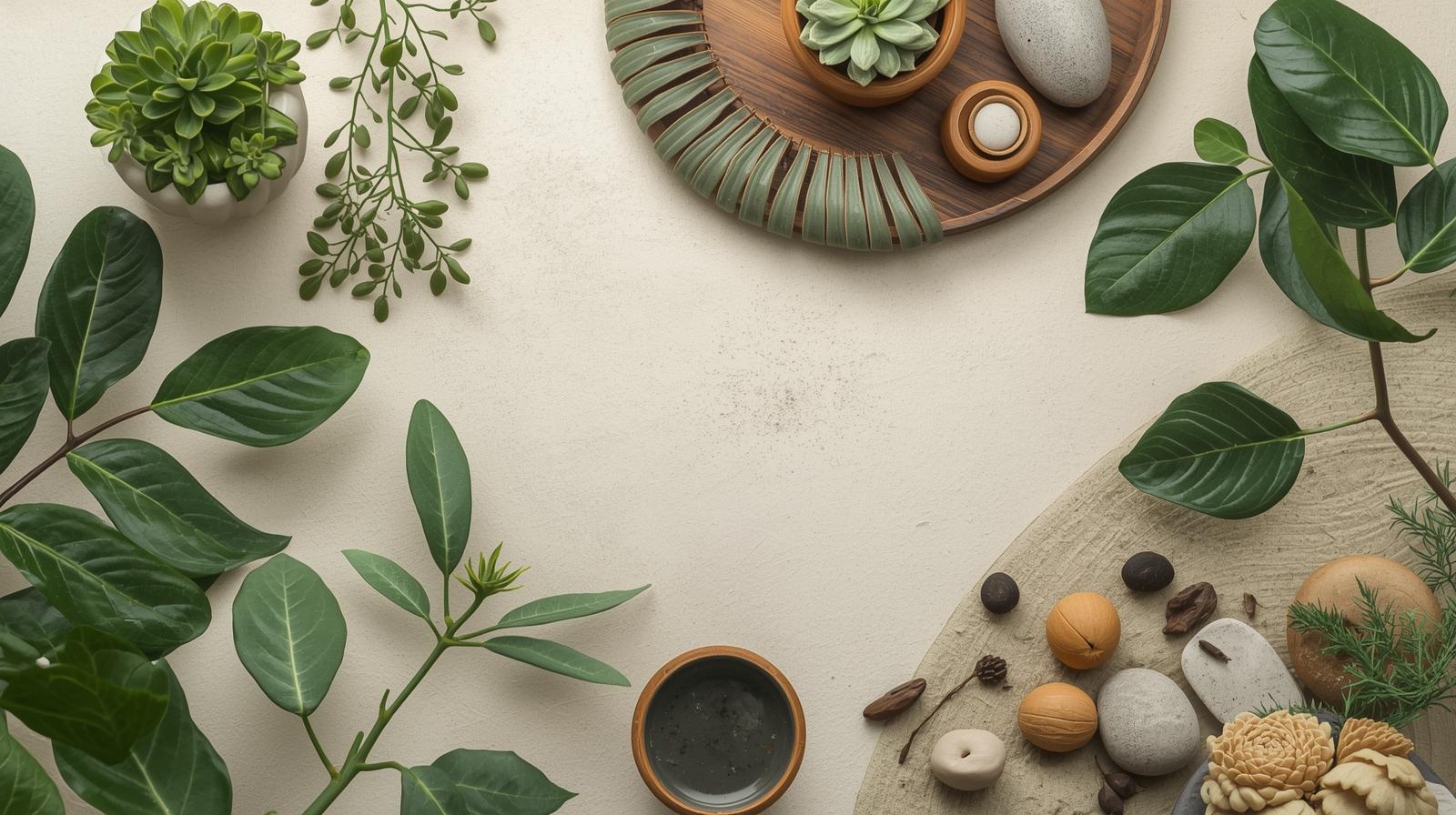
Let your routine become meditation: watering as offering, pruning as discernment, repotting as renewal. Each act is a chance to practice presence. And when you create a “plant altar”—a single pot, a smooth stone, a beeswax candle—you build a sacred space for slow reflection.
This mindset extends beyond the windowsill. It seeps into how you move through your day—with more attention, less haste, deeper trust. As we explore in our guide to bonsai art, intentional cultivation is a spiritual practice, not just horticulture.
In tending to plants, we tend to ourselves.
Like a fallen leaf returning to earth, our human lessons compost into deeper understanding over time. The wisdom we gather from plants doesn’t stay theoretical—it integrates, transforms, and nourishes our inner landscape. We carry it in our hands when we touch soil, in our breath when we pause beside a fern.
End your day by touching the soil of your favorite plant—cool, alive, and humming with quiet intelligence. Feel the dampness, the crumble, the life within. In that simple act, you reconnect with the earth that holds you, feeds you, and mirrors your own cycles of growth and rest.
We are not separate from plants. We are fellow travelers in the slow dance of becoming—rooted, reaching, and always returning to the soil from which we came.
In a life that often feels fragmented and fast, plant wisdom offers a path back to wholeness—not through grand gestures, but through daily acts of quiet attention. To care for a plant is to practice love without expectation, patience without agenda, and presence without performance. And in that practice, we remember how to be human—soft, resilient, and deeply connected to the green, breathing world around us.