
Bring Zen into Your Space
Bring Zen into Your Space

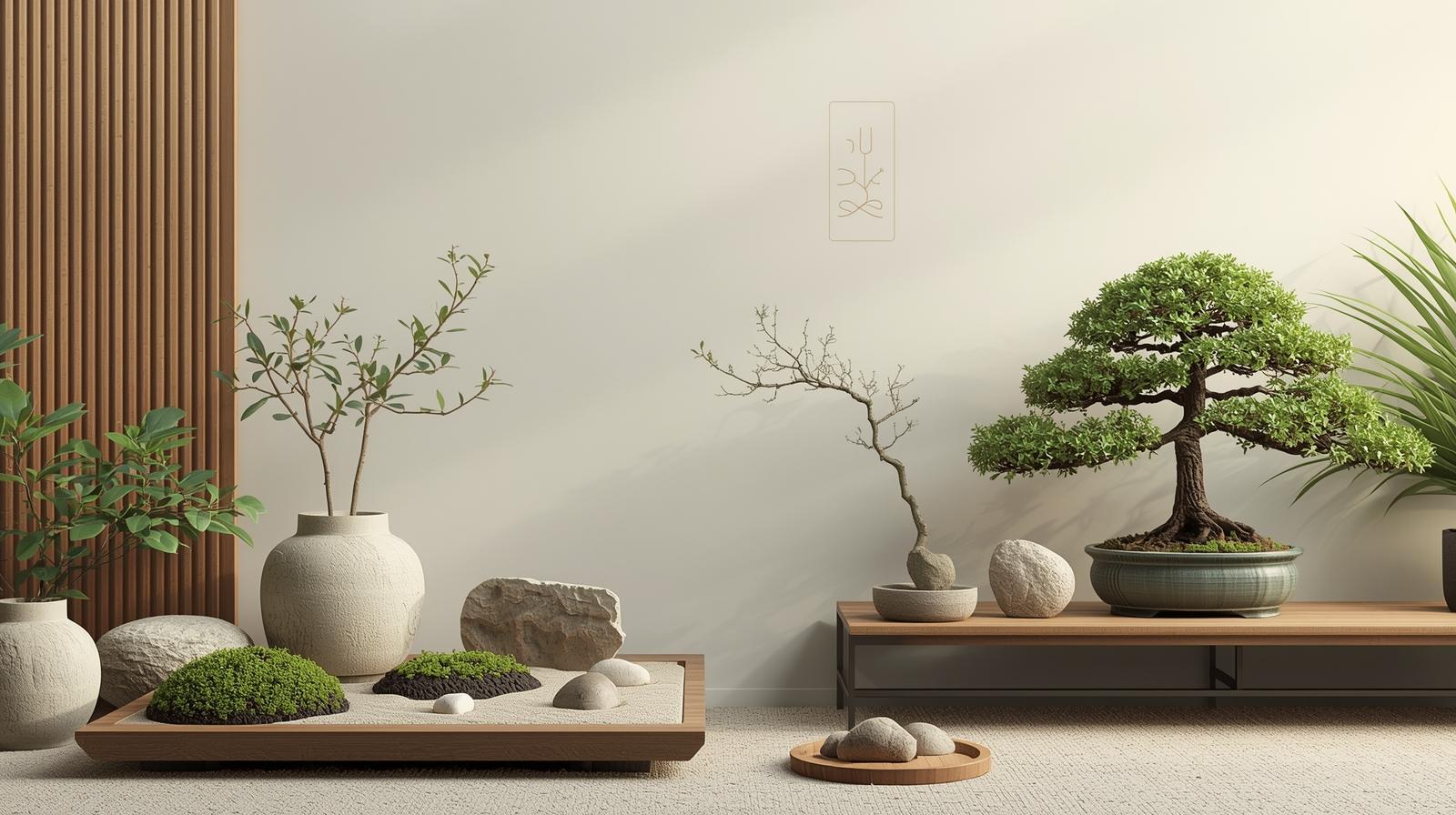
Imagine the quiet hush of a Kyoto garden at dawn—dew clinging to miniature pines, the soft rustle of moss underfoot, the air still and heavy with contemplation. In this stillness, a single bonsai stands not as decoration, but as a living poem shaped by centuries of patience, reverence, and whispered dialogue between human hands and nature’s will.
Like a river carving its path through stone, bonsai’s form was shaped not by force but by persistent, mindful attention across dynasties. Long before it became synonymous with Japanese minimalism, this art began in the misty mountains and scholar’s courtyards of ancient China. There, it was known as penjing—“tray scenery”—a practice that sought to capture the spirit of wild landscapes in miniature, complete with rocks, water features, and tiny figurines.
Picture Song Dynasty scholars arranging dwarfed trees in ceramic trays, their fingers brushing leaves as they recited poetry beneath moonlight. These early creations were not mere novelties; they were philosophical expressions, embodying Daoist reverence for nature’s harmony and the Confucian ideal of balance. Yet, as the practice traveled eastward, it would be transformed by a different set of spiritual eyes—those of Zen Buddhism.
Bonsai was never about control—it was about listening to the tree’s silent language and responding with humility. This shift in intention would come to define its soul. When Buddhist monks carried penjing to Japan between the 6th and 9th centuries, they began to strip away ornamentation, focusing instead on a single tree as a mirror of the soul.
In Japan, the art became less theatrical and more introspective. The landscape receded; the tree emerged. This evolution wasn’t just aesthetic—it was spiritual. As bonsai took root in temple courtyards, it became a vessel for a deeper inquiry into existence itself.
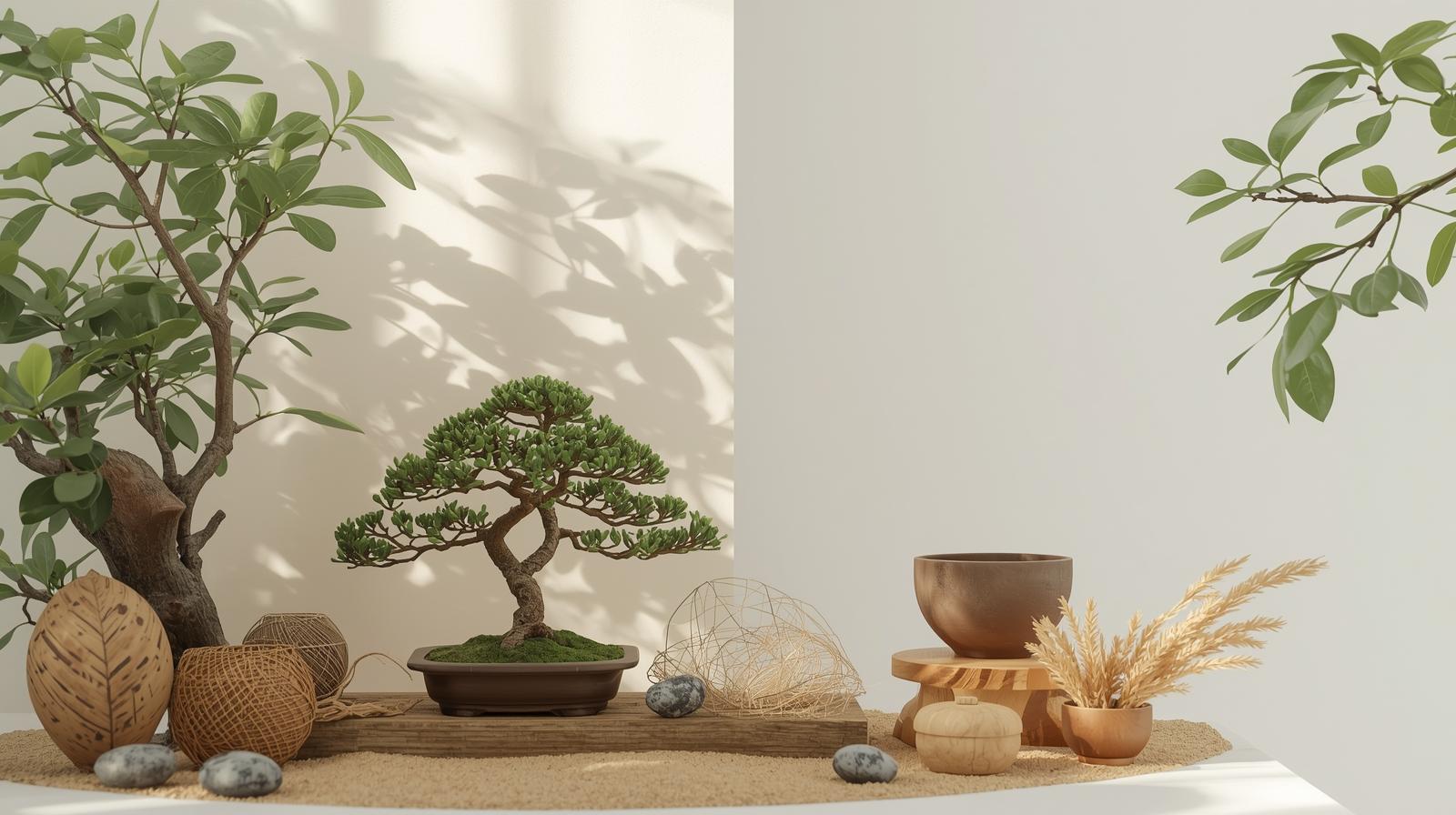
The Chinese art of penjing emphasized miniature worlds—entire ecosystems compressed into shallow trays. These compositions often included miniature bridges, pagodas, and even tiny animals, creating a narrative tableau. Beauty lay in the totality of the scene, a harmonious microcosm of the natural and human realms.
When Zen monks encountered penjing, they saw potential for something more intimate. They began cultivating single trees in unadorned pots, removing distractions to focus on the essence of one life form. This shift aligned with emerging Zen ideals: simplicity, asymmetry, and the beauty of imperfection—what would later be called wabi-sabi.
In this quiet transformation, the bonsai ceased to be a representation of nature and became nature itself—condensed, distilled, and honored in its raw truth. The tree was no longer part of a story; it was the story.
This reimagining reflects a core principle in plant philosophy: that plants are not passive objects but sentient participants in our inner lives. To care for a bonsai is to enter into a dialogue—one that asks us to slow down, observe deeply, and respond with care rather than command.
Thus, what began as a Chinese art of landscape miniaturization became, in Japan, a meditation on presence, resilience, and the sacred ordinary.
In the moss-draped courtyards of Rinzai and Sōtō Zen monasteries, bonsai was never considered horticulture. It was zazen—seated meditation—with soil and roots. Monks would rise before sunrise to water, prune, and wire their trees, not as chores, but as ritual acts of mindfulness.
Each movement became a breath in a silent dialogue with the tree. The snip of shears, the gentle twist of copper wire, the pat of soil—these were not tasks to complete, but moments to inhabit fully. The bonsai’s small scale mirrored a central Zen teaching: that enlightenment resides not in grand gestures, but in the quiet attention paid to the smallest details of daily life.
Sensory memory lingers in these spaces: the scent of wet akadama soil after rain, the sound of bamboo shears snipping a single leaf, the cool touch of ceramic against palm. These were not background noises—they were sacred sounds, anchoring the practitioner in the now.
In tending a miniature pine, the monk tended his own mind—pruning distraction, shaping focus, and learning to accept the tree’s natural inclinations rather than impose his will. The bonsai taught him humility, patience, and the art of non-attachment.
Even today, visiting a historic temple garden in Kyoto or Kamakura, one can feel this legacy: the trees stand not as possessions, but as companions in contemplation—silent, ancient, and deeply alive.
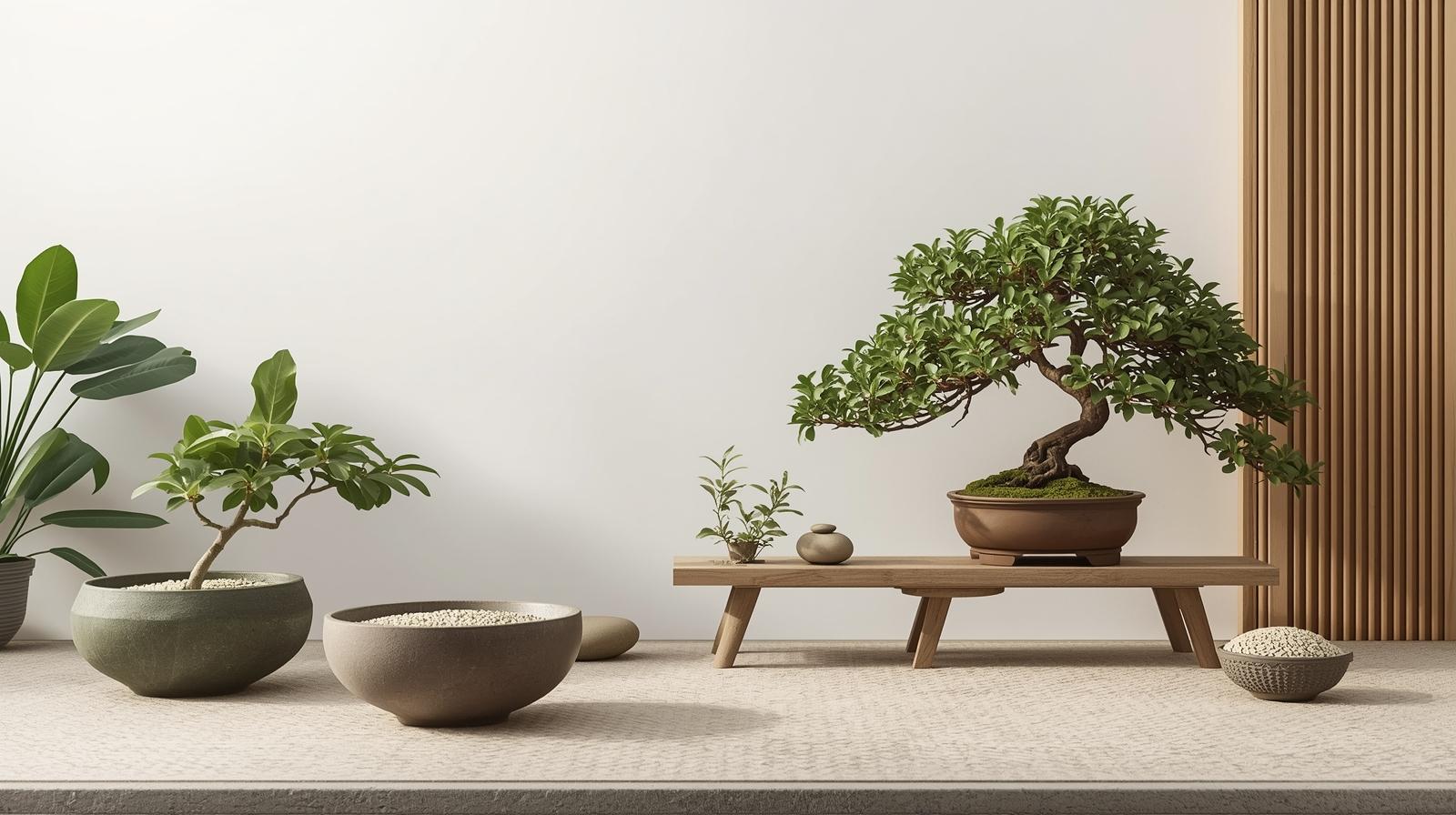
Bonsai styles are not aesthetic choices alone—they encode philosophical worldviews rooted in zen culture. Each form tells a story shaped by wind, time, and terrain, echoing the resilience and adaptability of life itself. A windswept shakan style tree isn’t just bent—it’s a survivor, shaped by invisible forces, much like the human spirit in adversity.
Run your hand along the gnarled trunk of a moyogi (informal upright) bonsai—feel its story in every twist. These forms are not imposed; they are revealed through years of observation and collaboration between caretaker and tree. The art lies not in making the tree look “perfect,” but in helping it express its true character.
Each style honors nature’s chaos while revealing an underlying order, echoing the Zen paradox of form within formlessness. What appears wild is deeply intentional; what seems simple is profoundly complex.
Understanding these styles is not about mastering technique—it’s about learning to see. To look at a bonsai is to witness a lifetime of weather, struggle, and quiet persistence. And in that gaze, we begin to see ourselves.
The formal upright style, or chokkan, stands with quiet dignity—its trunk straight, its branches balanced in harmonious tiers. It represents integrity and inner stillness, like a monk standing in meditation: rooted in the earth, yet reaching toward the light. This form teaches discipline without rigidity, strength without force.
In contrast, the cascade style (kengai) flows downward, as if clinging to a mountain cliff battered by storms. It embodies surrender and resilience—showing that sometimes, bending is the bravest form of standing. The tree does not fight gravity; it dances with it.
The literati style (bunjingi) is sparse and elegant, often with a single, slender trunk and minimal branching. Inspired by Chinese scholar-painters who valued emptiness as much as form, it speaks to the beauty of restraint and the power of negative space. In a world of clutter, the literati bonsai whispers: “Less is more.”
Choosing a style isn’t about preference—it’s about resonance. Which life lesson does your tree wish to teach? Perhaps it’s time for discipline, or maybe you need to learn how to bend without breaking. The bonsai offers no answers—only questions wrapped in bark and leaf.
Through these forms, we learn that beauty isn’t uniform. It’s diverse, contextual, and deeply personal—just like the paths we walk in our own lives.
In bonsai, deadwood is not hidden—it’s celebrated. Techniques like jin (stripped, bleached branches) and shari (stripped trunk sections) transform scars into art, honoring decay as part of life’s continuum. These features are not flaws; they are testaments to survival.
Uneven branch spacing, off-center trunks, and aged, fissured bark all honor wabi-sabi: the Japanese aesthetic that finds beauty in transience, imperfection, and incompleteness. This directly opposes Western ideals of symmetry and perfection, inviting a slower, more compassionate gaze.
The rough texture of a shari under your fingertips reminds you that scars can be sacred. They tell a story of endurance—of fire, storm, or drought—and of life continuing, even in broken places.
This embrace of imperfection extends beyond the pot. In zen living, wabi-sabi becomes a daily practice: accepting aging skin, worn furniture, or a quiet evening without stimulation. It’s a reminder that nothing lasts, nothing is finished, and nothing is perfect—and that is precisely what makes it beautiful.
Bonsai, then, is not about creating an ideal. It’s about revealing the truth of a life lived fully, with all its cracks and curves.
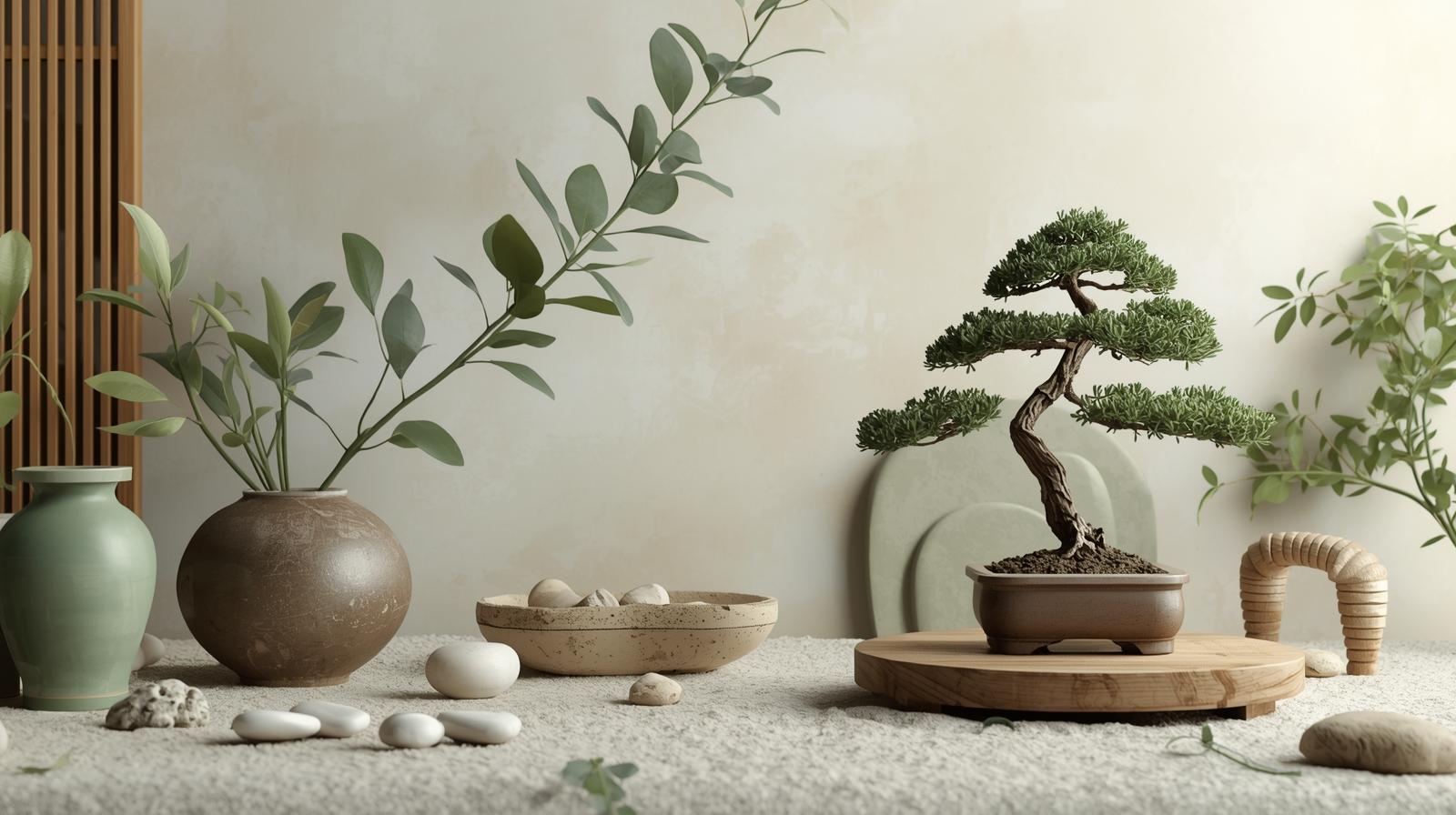
Caring for a bonsai is a moving meditation that cultivates presence, patience, and non-attachment. Watering a bonsai is like offering a prayer—each drop a moment of full attention, no more, no less. There is no rushing, no multitasking. Only you, the tree, and the quiet exchange between you.
Early morning watering, when roots are cool and receptive, becomes a sacred pause before the day begins. The droplets glisten on leaves like tiny mirrors, reflecting the sky and your own stillness. In this act, you are not “maintaining” a plant—you are participating in a rhythm older than language.
The tree doesn’t care about your goals—it only asks for your presence. In return, it teaches you to let go of outcomes. Will the new shoot survive? Will the wiring shape the branch as intended? These questions dissolve in the act of tending. What matters is the doing, not the result.
In a world that prizes speed and productivity, bonsai invites slowness as a radical act of self-care. Each ritual—pruning, repotting, misting—is a chance to return to yourself, breath by breath, leaf by leaf.
Spring arrives with tender new growth, and with it, the gentle work of wiring and pruning. This is not domination, but guidance—like offering a hand to a child learning to walk. The tree responds with fresh leaves, bright green and full of possibility, mirroring our own seasonal hopes.
Summer demands vigilance. The sun beats down, and the soil dries quickly. Watering becomes an act of compassion—checking the pot twice a day, feeling the weight of the container, listening to the tree’s unspoken thirst. In this heat, we learn that care is not occasional; it is continuous.
Autumn brings a different kind of wisdom. As leaves turn and fall, some bonsai are gently defoliated to encourage refinement. Root inspection during repotting mirrors the Zen practice of letting go—shedding what no longer serves, making space for renewal.
Winter is a season of rest. Growth slows; the tree retreats inward. This dormancy is not neglect—it is honored. The caretaker, too, is invited to pause, reflect, and trust that beneath the surface, life is preparing for its next cycle.
In syncing with the bonsai’s rhythm, we relearn our own—slowing down when the world speeds up, resting when we’re told to hustle, and trusting that stillness, too, is a form of growth.
Bamboo tweezers, concave cutters, and copper wire aren’t mere instruments—they’re conduits of mindful action. Each tool is chosen for its purpose, handled with care, and stored with respect. They are not accessories; they are partners in the dialogue with the tree.
Each cut is made with precision and restraint, embodying the Zen principle of “just enough.” Too much pruning shocks the tree; too little invites chaos. The caretaker learns the balance between intervention and allowance—a lesson that echoes far beyond the pot.
The soft click of shears closing is a bell calling you back to the present moment. In that sound, distractions fall away. There is only this branch, this leaf, this breath.
Clean your tools after use—not just for hygiene, but as a closing ritual, honoring the work done. Wipe the blades, coil the wire, return the tweezers to their case. This small act seals the meditation, marking the transition back to the wider world.
The cool weight of bonsai scissors in your palm becomes familiar, trusted—like an old friend who knows your rhythms and meets you without judgment. Through these tools, we learn that even the smallest actions can carry profound intention.
Bonsai’s principles extend far beyond horticulture—they offer a blueprint for mindful living in a distracted age. A city dweller’s windowsill bonsai becomes an anchor—a tiny forest reminding them to breathe amid digital noise, traffic hum, and endless notifications.
Place your bonsai where you’ll see it daily—not as décor, but as a silent teacher on your desk or shelf. Let its stillness interrupt your scrolling. Let its slow growth challenge your impatience. In its presence, time expands.
In a world obsessed with growth and scale, bonsai whispers: “Small is profound. Slow is wise.” It resists the cult of more—more leaves, more branches, more likes—and instead celebrates depth over breadth, presence over performance.
You don’t need a centuries-old juniper to live the bonsai way. You only need the willingness to pay attention—to nature, to yourself, and to the quiet spaces between moments.
At its heart, bonsai is a living expression of zen culture—a tradition that values presence, simplicity, and harmony with nature above all. Unlike static art, bonsai evolves. It breathes, grows, suffers, and heals. It demands relationship, not ownership.
This dynamic quality mirrors Zen’s emphasis on lived experience over doctrine. Enlightenment isn’t found in books; it’s discovered in the act of watering, pruning, waiting. The tree doesn’t offer answers—it offers presence. And in that presence, we find our own.
Every branch carries the imprint of wind, every scar the memory of storm. To care for a bonsai is to accept that life is not about control, but about collaboration—with nature, with time, and with the unfolding mystery of your own heart.
In this ancient art, we find a mirror: small, quiet, and endlessly revealing. And perhaps, in tending it, we learn to tend ourselves with the same patience, reverence, and grace.