
Bring Zen into Your Space
Bring Zen into Your Space

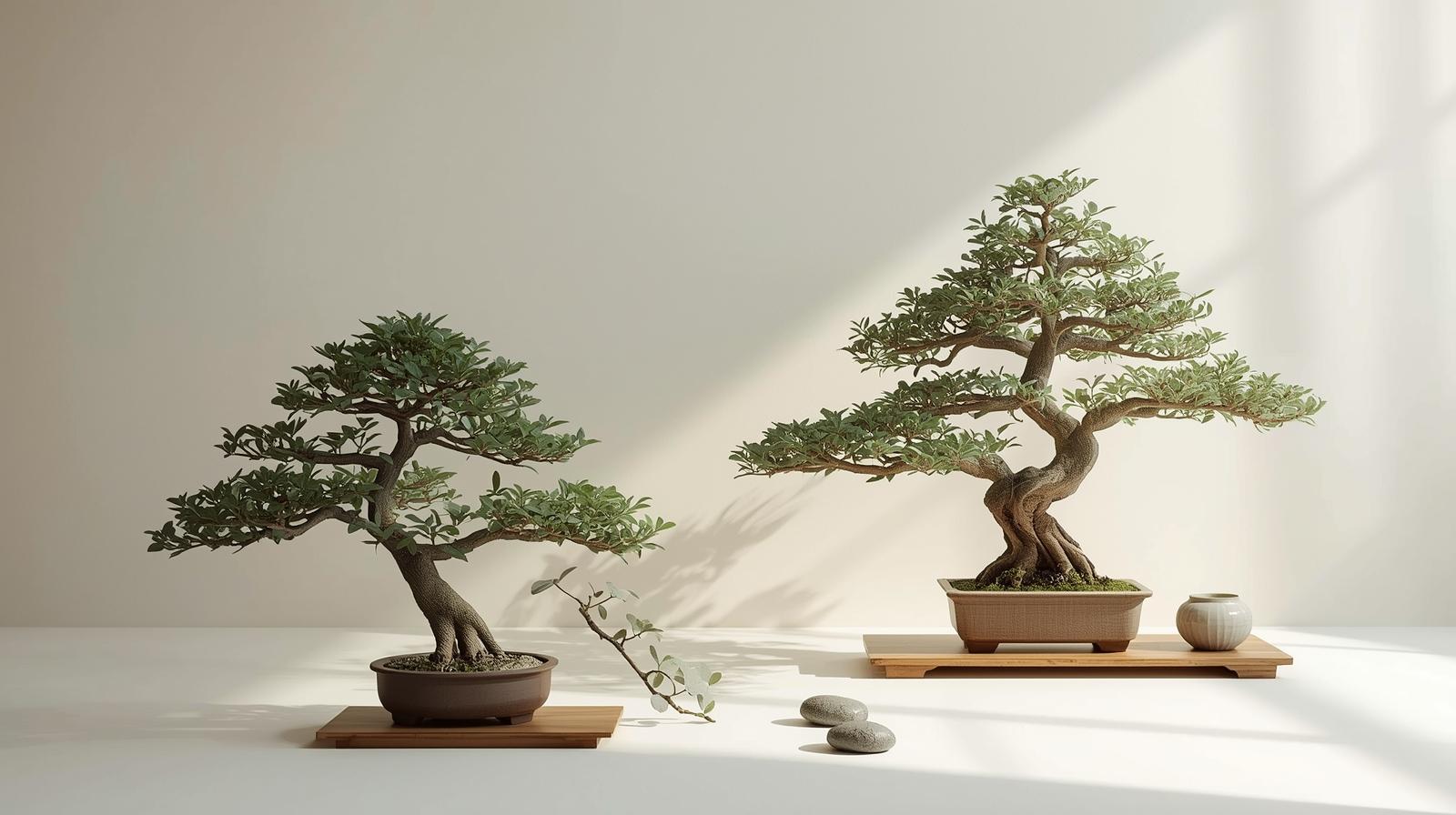
In a world that moves ever faster, the quiet presence of a bonsai tree offers a rare kind of stillness. The art of bonsai invites us to slow down, to witness growth not as a race but as a meditation—where patience, attention, and reverence shape not just a tree, but the caretaker as well. This article explores how the ancient practice of cultivating miniature trees can become a pathway to mindfulness and aesthetic harmony.
Bonsai is far more than gardening in miniature. It is a living art form—an ongoing conversation between human hands and the spirit of the tree. At its heart, the art of bonsai is guided by balance, restraint, and intention.
Though its roots trace back to ancient Chinese penjing, it was in Japan that bonsai evolved into a refined spiritual and aesthetic discipline. Over centuries, it absorbed the values of harmony, respect, and simplicity that permeate traditional Japanese culture.
Unlike ordinary horticulture, bonsai does not seek to dominate nature but to collaborate with it. Every snip, every wire, every repotting is a gesture of care—never control. The tree remains wild at its core, even as its form echoes the grandeur of ancient forests in miniature.
Bonsai is steeped in Zen philosophy. It embodies impermanence (mujō)—the understanding that all things change, including the shape of a branch or the color of a leaf. It honors simplicity (kanso), finding beauty in what is essential rather than ornate. And it reflects naturalness (shizen), resisting artificial perfection in favor of organic asymmetry.
Caring for a bonsai is not a chore but a daily ritual of presence. Watering, observing, pruning—these acts become moments of grounding in a distracted world. In this quiet routine, we learn to listen, not just with our eyes, but with our whole being.
When placed in a home, a bonsai becomes more than decoration; it becomes a focal point for reflection. Its understated elegance aligns with the Zen approach to plant styling, where space, silence, and subtle form invite calm contemplation.
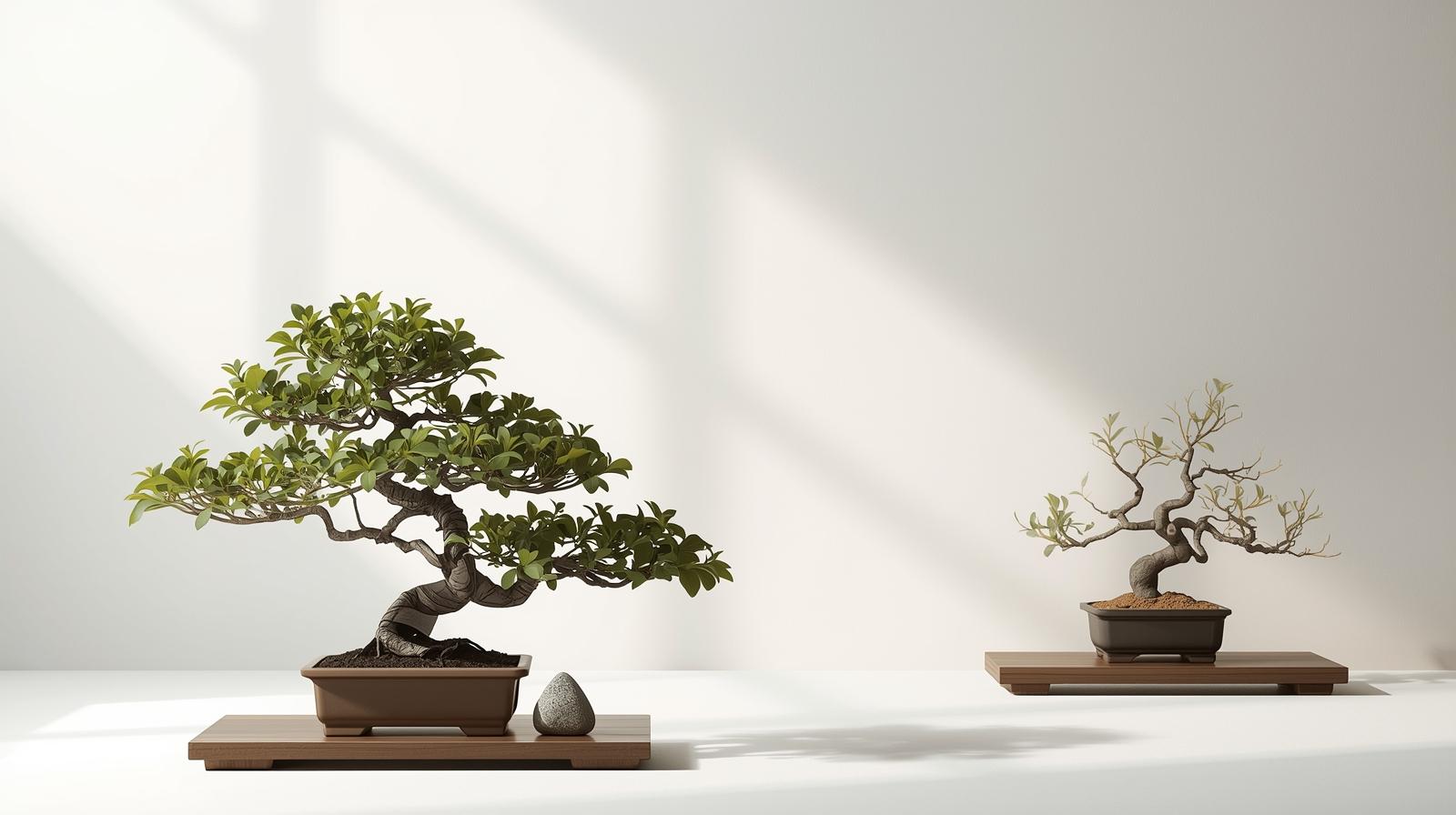
Just as we shape a bonsai, it shapes us. Pruning away excess branches mirrors the inner work of releasing distractions, ego, and unnecessary burdens. Wiring a young shoot to guide its direction echoes our own efforts to gently steer habits toward growth.
A bonsai does not rush. It responds to seasons, to light, to care—never to impatience. In watching it unfold over months and years, we remember that real transformation is slow, quiet, and often invisible until it suddenly isn’t.
Seasonal changes in your tree—new buds in spring, golden leaves in autumn—can become gentle reminders of your own cycles: times of expansion, rest, renewal. The bonsai becomes a companion in self-awareness, rooted in the earth yet reaching toward the sky.
Starting your bonsai journey begins with choosing the right tree—one that matches your environment, schedule, and temperament. Fortunately, several species are forgiving, resilient, and rich in character.
The Ficus is ideal for indoor growers. With glossy leaves and tolerance for low light, it thrives in apartments and responds well to pruning. Symbolically, it represents abundance and interconnectedness, its aerial roots echoing life’s hidden ties.
Juniper is a classic outdoor bonsai, beloved for its feathery foliage and rugged spirit. It loves full sun and good airflow, making it perfect for balconies or gardens in temperate climates. In Japanese tradition, juniper symbolizes protection and endurance.
The Chinese Elm offers the best of both worlds—suitable for indoor or outdoor cultivation, with small leaves and graceful bark that ages beautifully. It’s remarkably adaptable and forgiving of beginner mistakes, embodying resilience and quiet dignity.
For those drawn to succulents, the Jade plant (Portulacaria afra) makes a striking bonsai alternative. Its thick, fleshy leaves store water, requiring less frequent care, and its sturdy trunk develops character with age. It symbolizes good fortune and grounded energy.
Choose a species that lives comfortably in your climate and aligns with your daily rhythm. A thriving bonsai begins not with perfect technique, but with a willing partnership between tree and caretaker.
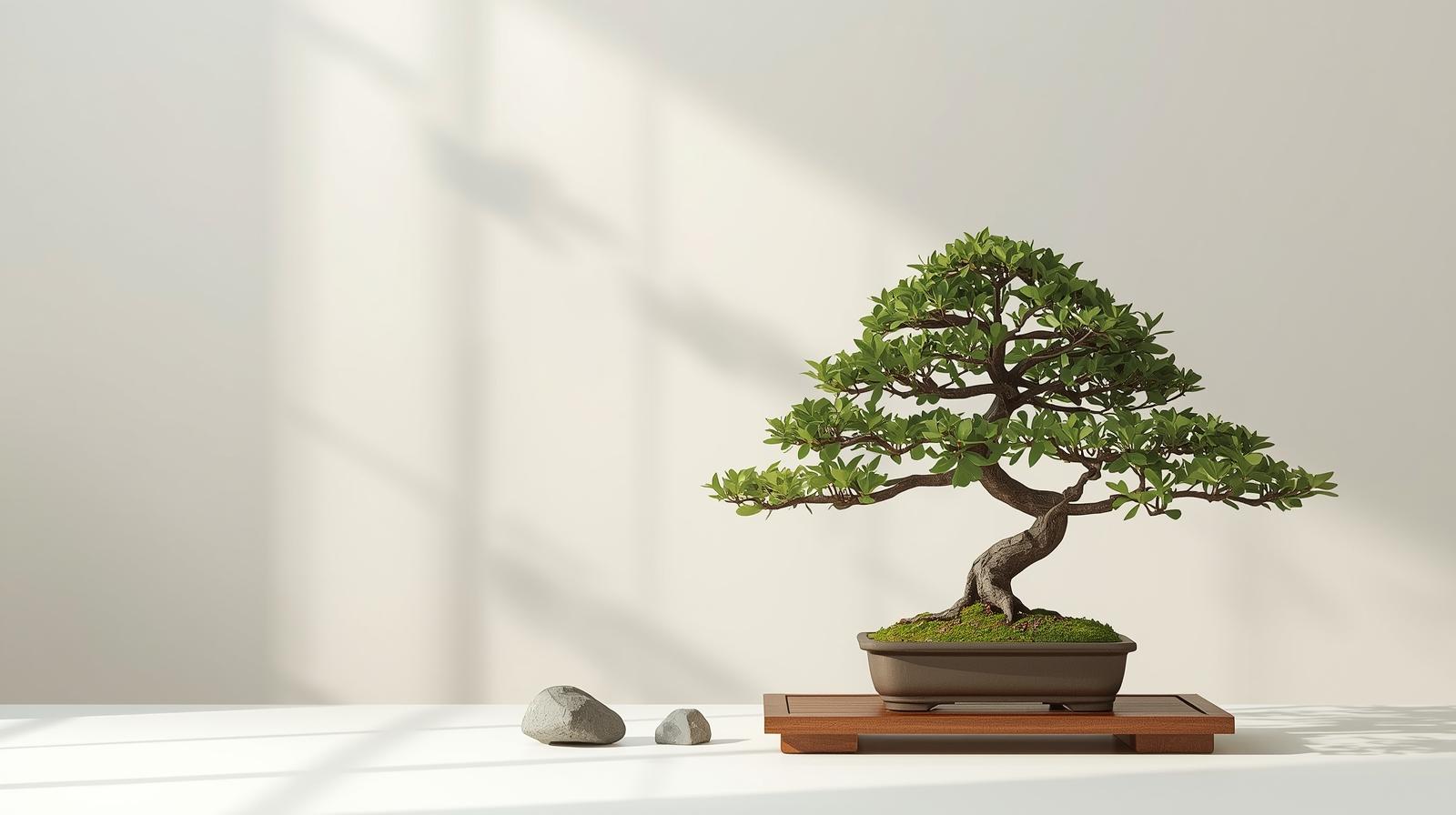
A bonsai speaks in whispers. Yellowing leaves might signal overwatering; drooping branches could mean thirst or insufficient light. Rather than following rigid rules, learn to read these subtle cues as a form of dialogue.
Soil moisture is one of the clearest messages. Press your finger gently into the top layer—if it’s dry an inch down, it’s time to water. If it’s still damp, wait. This simple act becomes a moment of mindfulness, a pause in your day to check in—not just with the tree, but with yourself.
Over time, you’ll notice how your tree responds to seasons, to your touch, even to your mood. This isn’t mysticism—it’s attentiveness. In listening deeply, you move from caretaker to companion.
Pruning, wiring, and repotting are the core techniques of bonsai—but they are not chores. They are meditative acts, each requiring presence, precision, and respect for the tree’s natural form.
Pruning removes what is unnecessary, allowing energy to flow to the parts that matter. Always use sharp, clean shears to make precise cuts. Prune during the growing season for deciduous trees, or year-round (with caution) for evergreens like juniper.
Wiring guides growth without forcing it. Aluminum or copper wire is wrapped gently around branches to shape them over weeks or months. Never wire too tightly—this can scar the bark. And always remove the wire before it bites into the wood, usually within 3–6 months.
Repotting, done every 2–5 years depending on the species, refreshes the soil and trims the roots to maintain balance. It’s a moment of intimacy—seeing the hidden network that sustains your tree, and tending to it with care.
These practices are not about achieving perfection. They are about showing up, again and again, with gentle hands and an open heart.
In a culture obsessed with speed and instant results, bonsai is a quiet rebellion. A well-shaped bonsai may take ten, twenty, even fifty years to mature. Some trees outlive their caretakers, passed down through generations like a living heirloom.
This slowness is not a flaw—it’s the point. Bonsai teaches us to value depth over speed, process over product. A single new leaf after a season of dormancy can feel like a miracle, precisely because it was not rushed.
When you feel impatient with your tree’s progress, remember: it is not behind. It is exactly where it needs to be. And so are you.
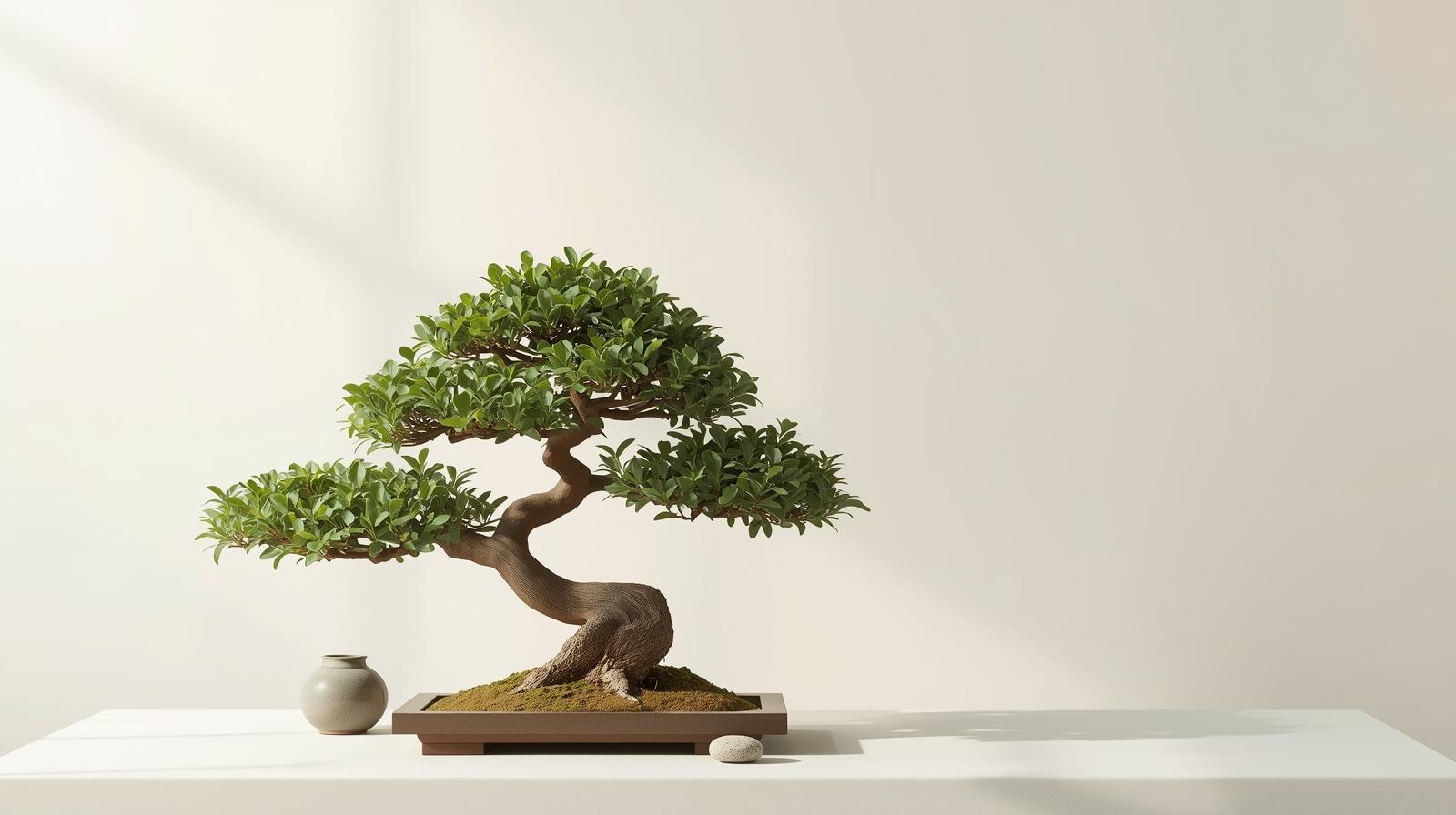
A bonsai deserves a stage that honors its presence. Avoid placing it among clutter or competing decor. Instead, choose a simple stand—wood or stone—that elevates it without overshadowing its form.
Position it against a neutral backdrop: a white wall, a tatami mat, or a smooth slab of slate. This emptiness is not absence but space—an invitation to focus, to see the tree fully.
Lighting matters deeply. Soft, natural light from a north- or east-facing window is ideal for most indoor bonsai. Avoid harsh midday sun, which can scorch leaves. For outdoor bonsai, dappled shade often mimics their natural forest-edge habitat.
A single bonsai, thoughtfully placed, can anchor a room like a miniature zen garden—a focal point for stillness in the midst of daily life.
Just as your tree changes with the seasons, so can its display. In spring, place it near a window where morning light encourages new growth. In summer, move it to a shaded porch for airflow and protection from heat.
Autumn invites introspection. Bring your bonsai to a quiet corner where you can observe its leaves turning—gold, crimson, or bronze—before they fall. Winter is a time of rest; let it sit in a cool, bright space where dormancy can unfold undisturbed.
This practice echoes the Japanese concept of kigo—seasonal awareness woven into daily life. By shifting your bonsai’s placement with the turning year, you align your home with nature’s rhythm, deepening your own sense of time and place.
Many believe bonsai trees are genetically dwarfed plants. In truth, they are ordinary tree species—oak, maple, pine—cultivated to remain small through careful root management and pruning. The same seed, planted in open soil, would grow into a full-sized tree.
Another myth is that bonsai are “tortured” or stunted. On the contrary, a well-cared-for bonsai is healthy, vigorous, and often lives longer than its wild counterparts. Its small size is not deprivation but refinement—a distillation of essence.
Beginners often fear making mistakes. But bonsai is forgiving. A mispruned branch may sprout new buds; a wiring scar can become part of the tree’s story. Each error is a lesson in observation, humility, and resilience—not failure.
You don’t need a collection to begin. Start with one tree. One quiet moment each morning. One breath as you check the soil, one glance as you pass by. From this simplicity, a deep relationship can grow.
Consider keeping a small journal. Note the date of watering, the appearance of new buds, the way light falls on the leaves in late afternoon. Over time, these entries become a map of shared time—a record of mutual care.
You’re not alone. Local bonsai clubs, online forums, and workshops offer gentle guidance—not as judges, but as fellow travelers. In these communities, knowledge is shared freely, and every tree is honored for its uniqueness.
Ultimately, bonsai is not about creating a perfect miniature landscape. It’s about presence. The tree asks for nothing but your attention—and in return, it offers stillness, beauty, and a connection to something older and wiser than yourself.
As you sit with your bonsai, you join a lineage stretching back over a thousand years. The same hands that once shaped pines in Kyoto temple courtyards now guide your own. To learn more about this quiet legacy, explore the history of bonsai—a story of art, exile, resilience, and reverence that now lives on your windowsill.